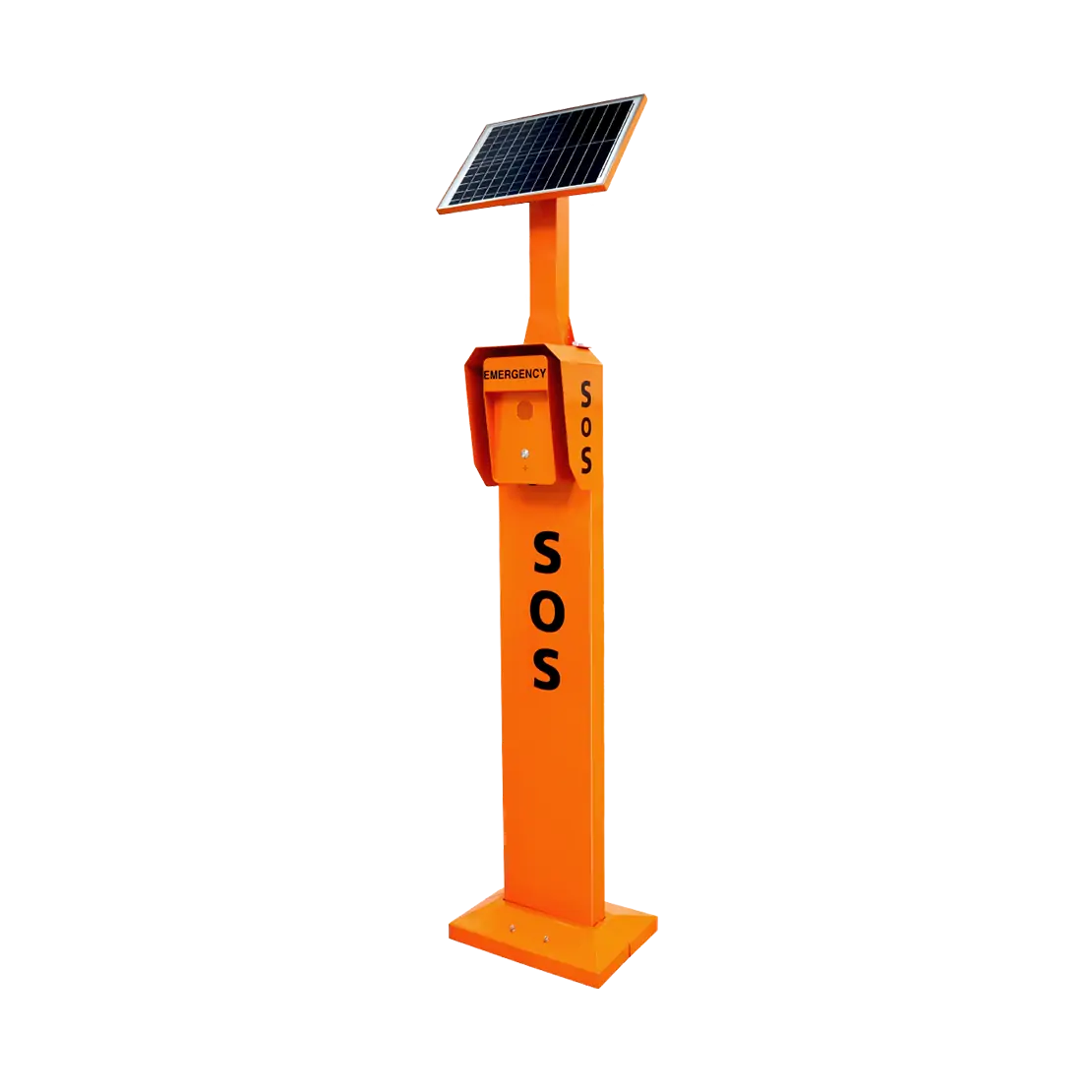
Industries are seeking faster, reliable communication networks to improve safety, monitoring, and productivity. The 5G communication system offers high speed, low latency, and support for many devices. While current explosion-proof phones remain wired, 4G telephones and telephone pillars like the JR306-SC-SP installed on the Maldives beach show practical industrial communication today. Understanding what is a wireless communication system helps industries plan for future upgrades. By combining wired devices with 5G-ready systems, companies can improve automation, real-time monitoring, and emergency response in harsh or remote environments.

Smart City project in Spain
4G vs 5G Communication System Capabilities
The 4G network has been proven to be able to support industrial communication such as wired explosion-proof phones and telephone pillars. Nevertheless, the industry of today requires greater speed, real-time reaction, and greater connectivity of devices. The 5G communication system takes care of these requirements, with more robust industrial performance.
Speed and Latency Improvements
The 5G provides up to 10 Gbps of data speeds and 1 millisecond of latency. This enables monitoring of machines faster as compared to 4G and making decisions in real time at factories or remote installations.
Device Connectivity
The 5G communication system is capable of supporting 1 million devices per square kilometer. This perfectly fits into industrial IoT, where sensors and machinery, as well as control units, are connected at the same time.
Reliability and Coverage
5G is more stable than 4G, reducing network interruptions. This ensures continuous communication in offshore or seaside installations, including telephone pillars like the JR306-SC-SP.
Limitations of 4G
- Moderate data speed for large industrial systems
- Higher latency limits automation
- Limited device capacity in dense networks
- Reduced coverage in remote areas
Industrial Use Cases of 5G Communication System
The 5G communication system enables industries to be more automated, monitored and safer in manners which 4G and wired phones cannot achieve solely.

The beach of Maldives
Smart Factories and Automation
The 5G can better coordinate robots, machinery, and sensors in factories. It minimizes errors, enhances production efficiency, and provides real-time data to make decisions than the conventional wired 4G systems.
Remote Monitoring and Safety
Remote industries use wired 4G telephones and solar powered telephone pillars, like the JR306-SC-SP on beaches in Maldives. The concept of a wireless communication system assists industries to design future 5G adoption to achieve quicker monitoring and emergency notifications.
Industrial IoT Applications
- Sensors for machine monitoring
- Predictive maintenance alerts
- Real-time data reporting to control centers
- Automated control of industrial processes
Explosion-Proof Equipment
Selecting the correct certification for safety is essential. When upgrading or planning devices, industries must consider IECEx vs ATEX standards to ensure explosion-proof phones meet regulations.
Network Architecture of 5G Communication System
The 5G communication system uses a network design that supports high speed, low latency, and large device networks, unlike traditional 4G wired systems.
Core Network
The virtualized 5G core manages devices, traffic, and security. Industries can scale operations without affecting network performance, supporting both wired and 5G-ready devices.
Radio Access Network (RAN)
5G uses small cells and higher frequency bands to handle dense networks. Compared to 4G telephone pillars, RAN can support many devices in factories, offshore, and seaside installations.
Edge Computing
Edge computing processes data close to devices, reducing latency. Real-time decisions in factories or monitoring systems are possible without sending all data to central servers.
Backhaul and Transport Network
- Fiber and high-speed wireless links connect cells to the core network
- Supports real-time monitoring and emergency communication
- Ensures reliable operations in harsh environments
Deployment Challenges of 5G Communication System
Implementation of 5G communication system in industries has numerous benefits, but is also associated with challenges. The industries have to deal with the infrastructure cost and signal coverage, compatibility of devices and safety standards to make sure that their functioning is safe and reliable. Successful implementation requires careful planning.
Infrastructure Costs
5G deployment requires small cells, fiber backhaul, and compatible devices, which can be costly compared to current wired 4G telephones and telephone pillars.
Coverage and Signal Issues
High-frequency 5G signals have shorter range and can be blocked by machinery or walls. Careful planning is needed for factories, offshore platforms, or seaside sites.
Security and Device Integration
- More connected devices increase cybersecurity risks
- Explosion-proof phones remain wired
- Industries need planning for mixed 4G and 5G setups
Safety Standards
Upgrading requires adherence to industrial safety certifications. Choosing between IECEx vs ATEX ensures compliance for explosion-proof devices and remote installations.
Future Outlook of 5G Communication System
The 5G communication system will enhance the efficiency, safety, and connectivity of the industries, including remote or offshore locations.
Smart Cities and Industrial Utilities
With 5G, it is possible to monitor energy grids, traffic and safety systems in real-time. Factories and the general infrastructure have the opportunity to work more effectively.
Renewable Energy and Offshore Installations
Wired communication in the present day is exhibited in telephone pillars such as the JR306-SC-SP which have solar panels on the beaches of the Maldives. Integration of 5G would be beneficial in remote monitoring, maintenance alerts and operational safety.
Healthcare and Remote Monitoring
Hospitals can implement 5G in telemedicine and patient monitoring. Live communication enhances clinical and operational process.
Logistics and Supply Chain
- Real-time tracking of goods and assets
- Automated warehouses and delivery systems
- Reduced errors in industrial operations
- Faster communication between remote sites
Industrial Expansion
Combining existing wired 4G systems with 5G-ready devices allows industries to increase efficiency, safety, and automation for future operations.
5G Communication System vs Wired and Wireless Systems
Understanding what is a wireless communication system helps industries compare wired 4G setups with future 5G adoption.
Performance Advantages
Older wired systems are reliable but limited in speed, latency, and device capacity. 5G improves automation, monitoring, and response times in industrial operations.
Benefits for Industrial Use
- Faster data transfer and processing
- Connect more devices simultaneously
- Real-time monitoring for safety and predictive maintenance
- Integrates with wired systems without replacement
Safety Compliance
Before deployment, considering IECEx vs ATEX ensures explosion-proof phones and remote pillars meet regulations while preparing for future 5G upgrades.
Conclusion
The 5G communication system can lead to the next revolution in industry as the system will provide higher speed, reduced latency, and tremendous connectivity of devices. Wireless 4G telephones and pillars such as the JR306-SC-SP can be used together with 5G-ready systems to make industries safer and more efficient. Awareness of what constitutes a wireless communication system is useful in strategizing on how to upgrade it in the future. Also, adherence to the safety guidelines of IECEx vs ATEX will guarantee compliance to explosion proof devices. Through proper deployment planning, the industries will be able to increase automation, remote monitoring, and emergency response and are ready to face a smarter and safer industrial future.


 Prisons & Correctional Facilities
 Transportation & Underground Infrastructure
 Critical Industrial & Energy Facilities
 Marine & Offshore
 Manufacturing Plant & Public Facilities